Why the Domestic Violence Act still fails the women it was written for
Sri Lanka has had a law against domestic violence since 2005. Women still wait months for protection orders, and most never report at all. We mapped where the process breaks down.
Nadeesha Fernando
Legal research lead

A law on paper and a law in practice are two different things. Sri Lanka's Prevention of Domestic Violence Act has been in force since 2005, and in that time it has protected some women and failed many more. We spent eight months sitting in courts and interviewing 61 women about what actually happened when they tried to use it.
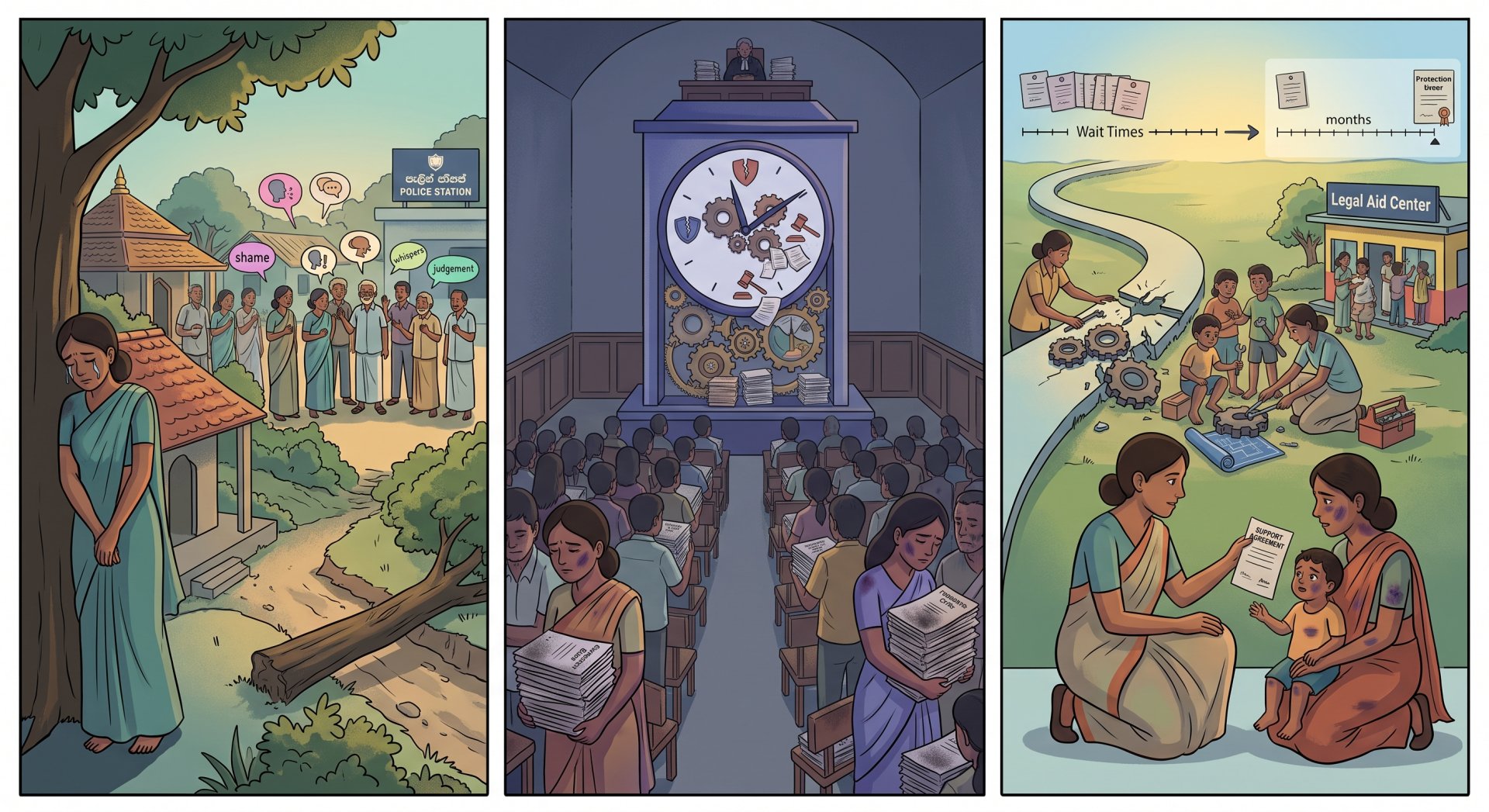
Where the process breaks down
The failures are not mysterious or hidden. They repeat, predictably, at the same four points.
- At the police desk. Two thirds of the women we spoke to were told to "come back in the morning", or asked whether they had really tried talking it through. Several were advised to reconcile.
- At the medical examination. Where injuries were not visible, women were told there was nothing to document. Bruising on dark skin, and injuries that fade within 48 hours, routinely go unrecorded.
- At the courthouse. Interim protection orders took a median of 34 days. In three districts our researchers could not find a single interpreter available on the day an application was heard.
- After the order. A protection order that is not enforced is a piece of paper. Officers rarely check on compliance unless a woman reports a fresh assault.
I was told to bring my husband so we could solve it together. The order was for him to stay away from me. — Respondent, Kurunegala district
What would change things
None of this is unfixable, and most of it does not need new legislation. Deploying trained first responders in every divisional secretariat, recognising photographic evidence at the point of complaint, and funding a duty roster of interpreters would move more women further than any amendment.
What we can no longer accept is a system that treats a woman's persistence as the price of her own protection.